
17.04.2020
Views: 397
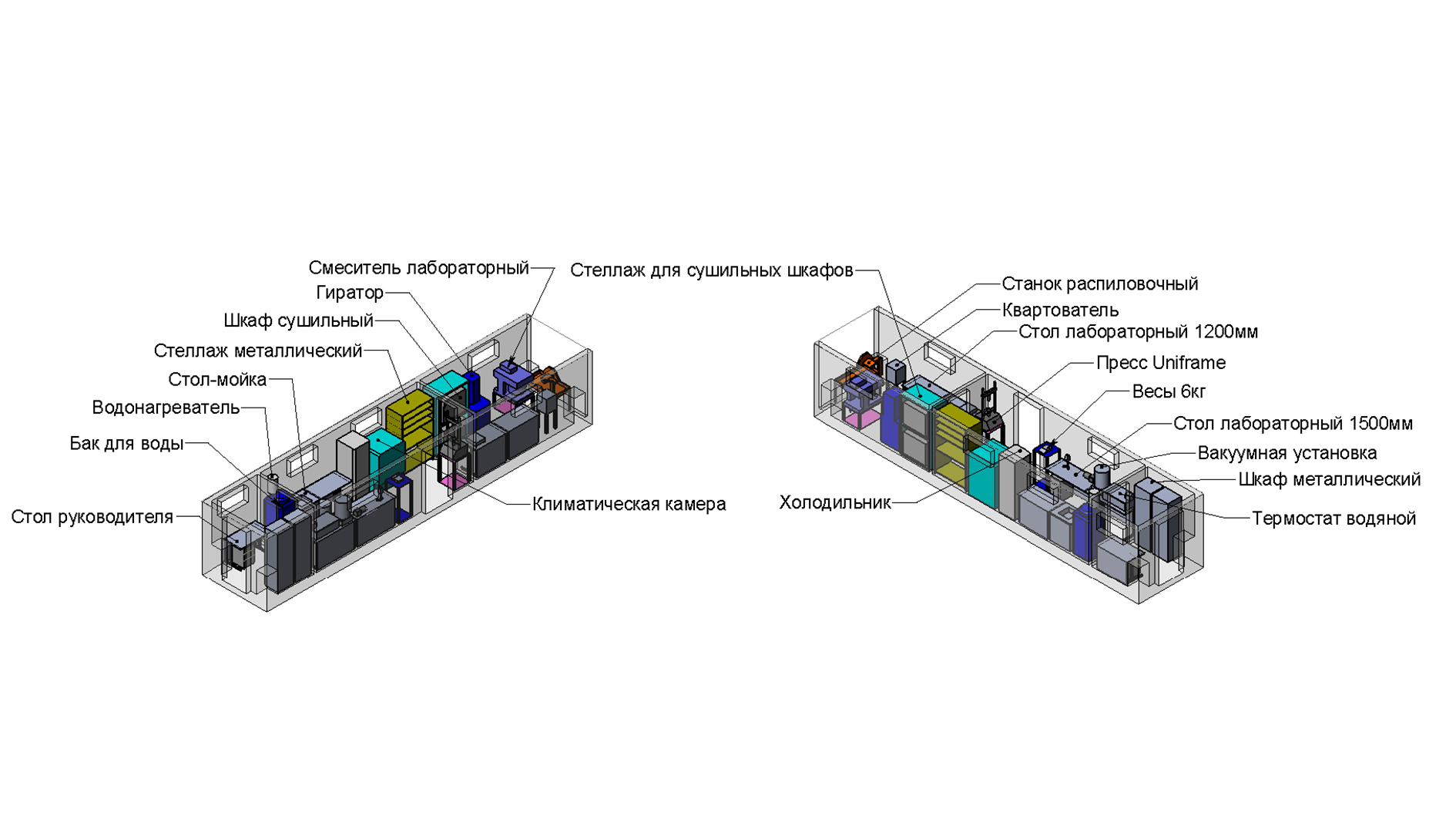
This year, the FAA "ROSDORNII" will launch progressive mobile laboratory posts of container type for volumetric design and control of asphalt concrete mixtures. This is part of the program of large-scale updating of the laboratory base of the Institution for the implementation of the national project of the BCAD.
Recall that as part of the implementation of the national project "Safe and High-quality Highways", the FAA "ROSDORNII" equips the testing laboratories of the Industry-wide Competence Center with advanced samples of measuring instruments and testing equipment. It will be used for testing road-building materials, including asphalt concrete, for compliance with the requirements of current regulatory and technical documents. This is part of monitoring the quality of road works.
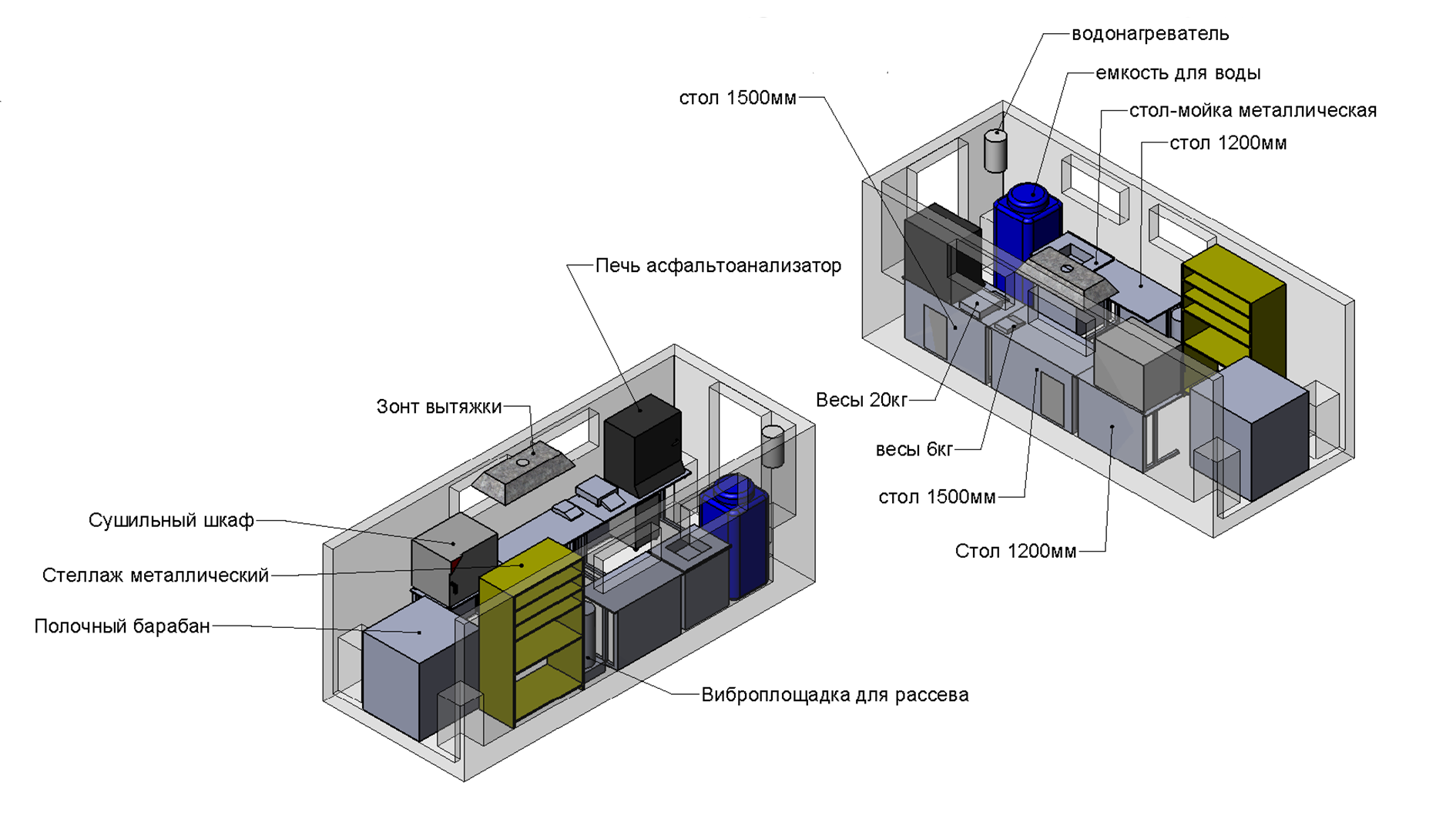
Large-scale updating takes place in stationary testing laboratories. In addition, six mobile laboratory posts are planned to be delivered to the constituent entities of the Russian Federation. Each post will consist of two container-type buildings, equipped with modern equipment. These will be one of the first mobile testing laboratories in Russia for volumetric design and control of asphalt concrete mixtures.
In 2019, a set of national standards was put into effect that establish technical requirements for asphalt concrete within the framework of the system of volumetric and functional design GOST 58401.1-2019 and GOST 58401.2-2019. Recall that this is one of the priorities for the introduction of new technologies. This complex system makes it possible to produce asphalt concrete with specified performance properties, taking into account the climatic conditions of a particular region and transport loads. In particular, its main differences from "traditional" technologies include:
6 mobile laboratory posts are equipped with everything necessary for testing at different stages of designing asphalt concrete mixtures and monitoring the quality of road construction – from acceptance of materials to testing of the finished mixture. In the list of equipment equipment for:
Currently, the FAA "ROSDORNII" coordinates the work on the manufacture and equipment of mobile laboratory posts.
Recall that as part of the implementation of the national project "Safe and High-quality Highways", the FAA "ROSDORNII" equips the testing laboratories of the Industry-wide Competence Center with advanced samples of measuring instruments and testing equipment. It will be used for testing road-building materials, including asphalt concrete, for compliance with the requirements of current regulatory and technical documents. This is part of monitoring the quality of road works.
Large-scale updating takes place in stationary testing laboratories. In addition, six mobile laboratory posts are planned to be delivered to the constituent entities of the Russian Federation. Each post will consist of two container-type buildings, equipped with modern equipment. These will be one of the first mobile testing laboratories in Russia for volumetric design and control of asphalt concrete mixtures.
In 2019, a set of national standards was put into effect that establish technical requirements for asphalt concrete within the framework of the system of volumetric and functional design GOST 58401.1-2019 and GOST 58401.2-2019. Recall that this is one of the priorities for the introduction of new technologies. This complex system makes it possible to produce asphalt concrete with specified performance properties, taking into account the climatic conditions of a particular region and transport loads. In particular, its main differences from "traditional" technologies include:
- Changing the method of manufacturing samples in the laboratory. In the "traditional" system, hydraulic presses are used, applying a significant (in some cases more than 30 tons) vertical load on the asphalt concrete mixture placed in a metal mold. In this case, crushing of crushed stone in the samples may occur. According to the new system, samples are compacted using a gyrator (rotary compactor). Happens simultaneous application of relatively small vertical and shear loads. Crushing of crushed stone does not occur. This compaction technique makes it possible to ensure the required quality of compaction of asphalt concrete samples for their subsequent tests in the laboratory and evaluation of the correctness of the selection of the composition of the mixture.
- The approach to determining the quality of asphalt concrete compaction is changing. The assessment according to the "traditional system" is carried out by the compaction coefficient – this is the ratio of the average density of the sample from the coating to the average density of the sample made in the laboratory (which, recall, was compacted with crushed stone crushing). According to the new method, the quality of the seal is evaluated using a vacuum pycnometer by the content of air voids in the sample;
- The brand of bitumen binder is determined based on the results of rheological tests. Bitumen binders are classified by temperature ranges (PG). This classification makes it possible to determine the upper and lower temperature limits of operation in which asphalt concrete manufactured using the estimated bitumen binder is sufficiently resistant to plastic deformations (track) with on the one hand and low-temperature cracking on the other;
- Additional tests of asphalt concrete are being introduced, simulating transport loads, for example, resistance to rutting and abrasion by studded tires.
6 mobile laboratory posts are equipped with everything necessary for testing at different stages of designing asphalt concrete mixtures and monitoring the quality of road construction – from acceptance of materials to testing of the finished mixture. In the list of equipment equipment for:
- Sieve analysis of the granulometric composition of mineral materials (sand, crushed stone);
- A complex of tests of mineral materials (determination of the density and absorption of sand, the number of voids in the sand, the resistance of crushed stone to crushing and wear at the Los Angeles installation, the resistance of crushed stone to abrasion by the Micro-Deval index);
- Tests of organic binders (using a Brookfield viscometer) to determine the dynamic viscosity of bitumen and temperature intervals of mixing and compaction of asphalt concrete mixtures;
- Manufacturing of homogeneous asphalt concrete mixtures in laboratory conditions at a given temperature;
- Manufacturing of samples by the method of rotational compaction (using a gyrator);
- Testing of samples for compression at a constant speed;
- Determination of the maximum density of the mixture and the content of air voids in asphalt concrete (using a vacuum pycnometer);
- Determination of bitumen content in asphalt concrete mixtures by burning method. The mineral part of the mixture after burning is used to determine the granulometric composition;
- Non–destructive testing - on-site assessment of the quality of asphalt concrete compaction (using an electromagnetic density meter).
Currently, the FAA "ROSDORNII" coordinates the work on the manufacture and equipment of mobile laboratory posts.