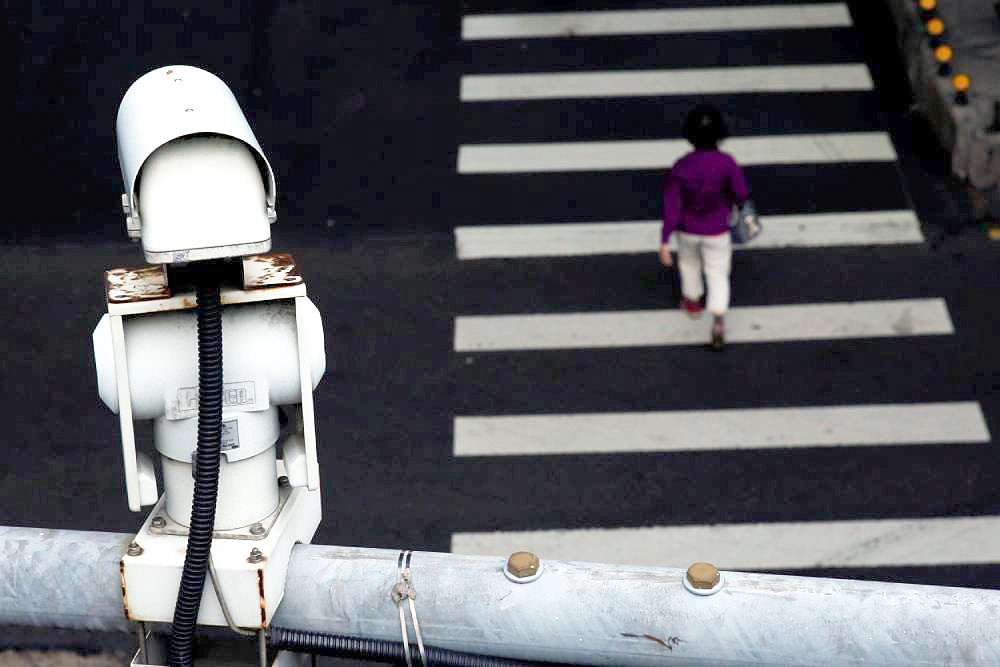
The final version of the new national standard has been developed, which should improve pedestrian safety. However, the Union of Pedestrians believes that there are many flaws in the draft standard that will not add safety to the most unprotected road users. The Union has sent its proposals to the developer of the project (available to Rossiyskaya Gazeta).
So, the new GOST "Automobile roads and streets. Pedestrian traffic safety. General requirements" was developed by the FAA "ROSDORNII". It proposes to optimize the operation of traffic lights at regulated crossings, including with the help of a call board and automatic pedestrian detection systems.
It is also planned to reduce the speed in areas of unregulated crossings with the help of signs, raised crossings, artificial irregularities and noise bands.
It is planned to improve the visibility of pedestrians and these crossings by equipping them with signal lights and LED beacons.
In addition, it is planned to equip the security islands with protection from the departure of vehicles (refuges) to them, - as well as delineators - columns or plates separating the flows. And sidewalks should be separated from the roadway by a continuous planting of shrubs, which exclude pedestrians from entering it outside the designated places.
Measures are provided for calming traffic with the help of ring intersections, reducing the number of traffic lanes or reducing their width, organizing zigzag traffic.
What is wrong with pedestrians in the project?
As the head of the Union of Pedestrians, Vladimir Sokolov, told RG, along with the proposed progressive solutions that have been tested in European countries and really increase pedestrian safety, there are flaws and contradictions in the project that can negatively affect the situation.
So, according to him, there is a widespread misconception in society that regulated pedestrian crossings are much safer than unregulated ones. But this is not the case. According to the data of the Scientific Center for Road Safety of the Ministry of Internal Affairs of Russia for 2012-2020 in Russia, the probability of hitting a pedestrian at regulated pedestrian crossings is almost twice as high as at unregulated ones. In particular, in 2020, 28% of fatal pedestrian collisions were committed at regulated pedestrian crossings, the number of which is 17% of all pedestrian crossings in Russia. And 72% of the collisions were committed at unregulated pedestrian crossings, the number of which is 83% of all pedestrian crossings. Thus, the probability of collisions with pedestrians at regulated pedestrian crossings is 1.9 times higher than the probability of collisions at unregulated crossings.
The GOST project to improve the safety of such transitions offers only the use of sound and tactile signals for persons with impaired vision or hearing functions. But that's not the problem. The project stipulates that the waiting time for pedestrians to allow a traffic light signal should not exceed 90 seconds at a traffic intensity of more than 700 cars per hour per lane, excluding pedestrian traffic. Thus, 18 cars can pass in 90 seconds, and maybe 100 pedestrians will be waiting for them. Obviously, not everyone will be waiting. As a result, there will be collisions. The waiting time should be determined not only by the intensity of automobile traffic, but also by pedestrian traffic.
The project establishes requirements for reducing the speed when driving unregulated transitions. And it does not provide the same for regulated ones. And they also need to reduce the speed with the help of signs, the installation of elevated crossings, as well as safety islands.
The project allows the arrangement of parking lots with partial arrival on the sidewalk. But the width of the sidewalk is determined based on the intensity of pedestrian traffic, to take away from pedestrians a part of the sidewalk for parking vehicles, and without fences, means creating difficulties for pedestrians when moving along the sidewalk, exposing them to danger.
The new standard allows the installation of bike lanes on sidewalks. But how will oncoming bicycles ride on it? It is possible to provide a bike lane on one side of the road, designed for their movement in both directions. And on the other side, leave the sidewalk only for pedestrians, so as not to create conflict situations.
And finally, how many times has it been said about the danger of unregulated crossings on roads with four lanes (two in opposite directions). The GOST project allows such crossings on streets where the speed is below 60 km/h. But neither the intensity of transport nor its speed will get rid of the situation when one the car will block the visibility of the other, and the pedestrians themselves. These are planned attacks on pedestrians, Vladimir Sokolov believes.
Источник: