23.08.2021
Views: 995
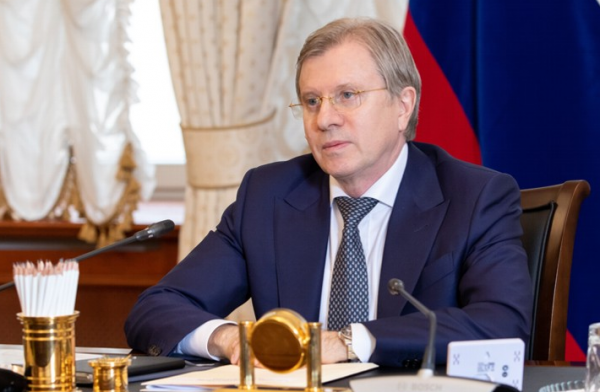
The Ministry of Transport is one of those federal agencies whose work is always in plain sight. In recent years, the situation in the transport sector has been changing dynamically for the better. The Minister of Transport of Russia Vitaly Saveliev talks about the work of the Ministry of Transport of Russia, the personal contribution of industry employees and interaction with the legislative corps.
- In recent years, with the participation of the Ministry of Transport, more than one worthy page has been inscribed in the history of our Fatherland. Let's recall the Crimean Bridge and the Tavrida highway, the Moscow Central Ring and two dozen modernized or built from scratch airport complexes. All this was created with the regulatory and regulatory role of your department. And what would you personally call the main success in your line of work?
- The role of the Ministry in the life of the country is growing. Our projects open up opportunities for trade and development of the country, as well as link together its most remote regions. Russia is becoming an important transport corridor due to its geographical location.
Over the past five years, our department has achieved serious success in implementing large-scale projects. During their implementation, we worked closely with deputies of the State Duma. The main event was the launch of the railway and automobile roads of the Crimean Bridge. The opening was attended by the President of Russia. He noted that this is "a world-class infrastructure project, the largest bridge not only in Russia in terms of length, but also in Europe."
The Central Ring Road is the largest project in the field of road infrastructure in the Moscow region today. The new highway has become the backbone of the Russian high-speed highway network and part of international transport corridors. The road crosses 13 federal highways. During the construction of the Central Ring Road, 225 artificial structures (55 bridges, 144 overpasses, 7 eco-bridges and 19 pedestrian crossings) and 18 transport interchanges were built. The length of the highway is 336.5 km . It unloads the MKAD and the Moscow region road network from transit transport. The President of Russia was present at the opening of the Central Ring Road and thanked all those involved in the opening.
Another major success of the transport industry - the four-lane highway "Tavrida" has become the main artery of the peninsula, connecting the Republic of Crimea and the federal city of Sevastopol with the Crimean Bridge. "Tavrida" corresponds to the technical category 1B, the speed is 90 km/h. The capacity of the road is 40 thousand cars per day. Now the travel time from Kerch to Sevastopol will take less than three hours, although it used to take a whole day.
Another important infrastructure project is the highway M–11 "Neva" Moscow − St. Petersburg. M-11 passes through the territories of six subjects: Moscow, St. Petersburg, Moscow, Tver, Novgorod and Leningrad regions. As part of the construction, 337 artificial structures and 30 transport interchanges were erected. The entire length of the highway corresponds to the parameters of the highest technical category with 4 lanes for traffic. From 6 to 10 lanes have been built on the sites directly near Moscow and St. Petersburg.
The project "Unmanned Logistics Corridors" is also connected with Neva, aimed at creating infrastructure and organizing unmanned cargo transportation between Moscow and St. Petersburg by the end of 2024. If successful, it is planned to scale the solutions tested on the M-11 highway to other routes, including sections of the international transport route "Europe – Western China", the M-1 highway "Belarus" and M-4 "Don".
As a successful example in the field of international cooperation, a large-scale project on transshipment of Belarusian petroleum products in Russian ports after reorientation from Baltic ports can be called. This project was implemented on the instructions of the President of Russia. According to the agreement signed with Belarus, almost 10 million tons of Belarusian oil products should be transported over the next years. In the first month after the conclusion of the intergovernmental agreement between Russia and Belarus, from March 5 to April 5, 2021, the volume of transshipment of petroleum products exceeded 222 thousand tons, with 176 thousand tons initially announced. Thus, the task set by the President was exceeded in the most expeditious terms.
- In Russia, as in the world, the general trend towards digitalization is noticeable today. It is known that your Ministry is also developing a number of proposals in this area. But the executive branch operates in the legal field created by the legislative branch. What was the interaction between the Ministry of Transport and the State Duma on this topic?
- I have worked for many years in commercial structures, where the most important thing is the result. I adhere to the same policy and as a minister. My predecessors have done a tremendous job, for which I am grateful to them. Now a new time has come — high technologies and high speeds, so now all our work is focused on the widespread introduction of digital technologies.
In the summer of 2020, digital technologies began to be applied to the transit of goods passing through the territory of Russia. This was due to the launch of the state cargo tracking system using electronic navigation seals based on GLONASS and the empowerment of the sealing operator – the company "Center for the Development of Digital Platforms". With the help of electronic seals, carriers and shippers were able to track their cargo routes online.
Most recently, on July 2, a law was adopted introducing the state information system of electronic transportation documents. The law is truly revolutionary, its adoption is a great victory for both the Ministry of Transport and our colleagues from the State Duma. The essence is simple — the translation of paper transport documentation into electronic form. In Russia, logistics companies, carriers and shippers annually we processed more than 3 billion documents in paper form. The costs of this process amounted to 2 - 2.5% of the annual turnover of transport enterprises. In 2022, it is planned to transfer all transport documents into electronic form not only at the Russian, but also at the interstate level.
- At first glance, it is difficult for the Ministry of Transport to complain about the inattention of deputies – dozens of laws have been adopted in the State Duma, developed by your department as a legislative initiative. But in fact – did everything succeed that I wanted? How would you generally evaluate the work of legislators from, so to speak, the "selfish" point of view of your department?
- Speaking in dry figures, during the period of work of the State Duma of the seventh convocation, 45 laws were adopted in the field of transport, in the development of which our department took an active part. The most significant were the laws on electronic transportation documents, the ban on disembarking stowaway children from public transport, and licensing of bus passenger transportation.
Due to the specifics of the Ministry, we cooperate not only with the relevant transport Committee, but also with related Committees on International Affairs, Security and anti-corruption, budget and taxes, and many others. I would like to thank, first of all, the Speaker of the State Duma Vyacheslav Viktorovich Volodin for his productive work. I also express my gratitude to the deputies of all parliamentary parties: they are professional and experienced people.
- For you and your department, it seems superfluous to ask about living evidence that ministerial work is not just documents, but something that can be touched with your hands, which improves the quality of people's lives, changes it for the better. Your work – and its results – are already accepted by millions of citizens every day. And not always without criticism. But with new roads and digitalization projects, this is, so to speak, a global job, And what could you personally highlight in the activities of the ministry, when it was your, his employees, joint efforts that directly improved the lives of fellow citizens?
- Many of our initiatives are aimed at this. For example, subsidizing preferential fares for family travel on long-distance trains. The reduced fare will be calculated as the difference between the cost of a ticket in a compartment and 50% of its cost in a reserved carriage. This project has been approved by the Government.
Already now flights of citizens from the cities of the Far East, Kaliningrad and Crimea to Moscow are subsidized.
We are also working to regularly update the rolling stock of passenger public transport. For example, in July, new NEFAZ buses purchased as part of the national project "Safe and High-quality Roads" entered the main city routes in Novosibirsk and Cherepovets. Buses are comfortable, spacious, equipped for people with limited mobility, have a cashless payment system, a place for a wheelchair.
At the moment, a "Single" ticket has been launched in several regions of Russia – this is a multimodal transportation system.
- And if the same question is asked in relation to your ministry, to the industry? After all, public administration is a complex professional sphere, the effectiveness of which depends to a great extent on the effectiveness of the work of civil servants. In 2020, the Government allocated new resources to increase the salaries of civil servants. In general, today in Russia 54 million citizens are recipients of state support in various forms. What does this mean in relation to your department? What is it anyway is the Ministry of Transport working to increase the motivation of civil servants?
- The Russian government really provides serious financial support to civil servants, including employees of our Ministry, for which we express our gratitude to the Government. These funds help to attract honored professionals and promising young specialists to the civil service, and adequately pay for their work.
If we are talking about employees of the transport sector as a whole, then they are employees of various subordinate structures of the Ministry, each of which gives them their own privileges.
If we talk about the employees of the Ministry directly, then they are all located in Moscow. They have some motivational privileges. First of all, it is worth mentioning the departmental clinic — the Central Clinical Hospital of Civil Aviation. All employees of the Ministry and their families with children are attached to it and receive high-quality medical care there. After a large-scale modernization, the polyclinic of the Russian University of Transport also opened on June 18. In addition to large-scale repairs and equipment purchases, in The polyclinic implemented the project "Digital Polyclinic", implying the use of digital technologies in administrative procedures.
In general, the motivation of employees begins even during their training in branch educational institutions. Today, Russian transport universities have grown significantly in terms of the quality of training specialists, and in this parameter they have reached the best world standards. Studying at modern universities with a strong scientific base, future employees of the transport sector understand the prospects and privileges of this career path. Graduates and employees of these educational institutions are attracted by government and business structures for various projects. In particular, scientists of the country's main industry university — the Russian University of Transport — participate in the development of the Arctic zone and the Northern Sea Route, a Transpolar expedition to study the possibilities of developing the Northern Latitudinal Course, are engaged in scientific support of the construction of large infrastructure projects (for example, transport facilities of the Yamal Peninsula), the survey of the Polar highway Salekhard – Igarka.
In order for employees to they felt comfortable in the transport environment, it is important to support them in other areas of life, in particular, in the family. Holidays and matinees are organized for the children of our employees, for example, a Christmas Tree. On Children's Day, we open the doors of our Ministry for them: we invite them to the departmental museum, tell them about the history of transport development and current trends in our country, so that the younger generation understands what an important thing their parents are doing.
For people who devote their lives to transport, it is important to understand that even after retirement they will not be forgotten. Therefore, we treat their merits with special respect, invite them to industry events and holidays. Our industry councils of veterans regularly visit their homes. Veterans do not remain "overboard" – their advice is listened to, and their opinion is taken into account.
- For the entire time of the pandemic, despite a significant drop in the number of passengers, not a single major transport company has closed in the country. Employees of these structures played an important role here, who, often risking their health, continued to ensure the vital activity of our country. As a result, traffic in Russia has not stopped: planes we flew, trains and public transport went according to the schedule.
Roads continued to be built across the country. Moreover, in the field of road management, 2020 was the most productive year in the last decade: 390 km of roads were built (for comparison, in 2019 - 318), 267 km were reconstructed (249 — in 2019), major repairs were carried out on1984 km of roads (1888 — in 2019).
During the rapid increase in the number of cases, it was decided to urgently evacuate Russian tourists from different countries. To do this, a working group was created under the leadership of the Ministry of Transport, which organized the interaction of the country's largest airlines. They sent planes to the countries where our citizens were located, and completely filled the planes, regardless of which company's tickets were in the hands of tourists. In total, more than 250 thousand Russians were taken out during the work of the group. At the same time, they were not left at the arrival airports - special internal routes were organized for them to return to their locality.
It is worth noting that in the unprecedented situation of the pandemic, the Russian Government provided tremendous support to the transport industry. This assistance has helped the industry stay afloat.
Unfortunately, however, the pandemic is far from over. There is already a way out of this situation – Russia was the first in the world to invent and register a vaccine against COVID-19. I urge everyone to follow my example and get vaccinated. The experience of foreign countries says that with the increase in the number of vaccinated, the disease inevitably wanes.
- The Ministry of Transport performs the functions of developing state policy and regulatory regulation in the transport sector, where there are many players - state corporations, state–owned companies, and large business structures. As far as we know, we had to carry out serious work on the delimitation of powers with Rosatom, which received the authority to develop the Northern Sea Route. Is the regulatory framework regulating the relationship between your Ministry and other subjects of law and economic activity in the transport sector sufficiently complete and convenient? What is to be worked on already with the new composition of deputies? What would you like to change in working together?
- My colleagues from Rosatom and I have been actively working on the delimitation of powers in the development of the Northern Sea Route. This work was necessary to avoid duplication of functions. For such productive work, I want to thank my colleagues from the Government, the State Duma and Rosatom, who helped us resolve controversial issues.
In cooperation with the State Duma, several areas are important to us. Firstly, these are the national projects implemented by our department: "Safe and high-quality highways" and "Comprehensive Plan for modernization and expansion of the trunk infrastructure", extended until 2030. Secondly, it is the "Transport Strategy of the Russian Federation for the period up to 2030 with a forecast up to 2035" - a system document that will determine the future of our country in terms of transport and infrastructure development. We expect the new composition of the State Duma to be no less active and productive in these areas than with the previous composition.
Answering the question about the completeness of the regulatory framework, I note that now one of the priorities in the development of the transport industry is the introduction of digital technologies and unmanned vehicles. Such innovations will require new legislation, which we will form together with our colleagues from the State Duma. Therefore, the most convenient regulatory framework is the one that meets the demand of time.
- After the amendments to the Constitution of Russia adopted last year, the role of the State Duma has significantly increased, now deputies will participate in the formation of the personal composition of the Government of Russia. In other words, the Government will henceforth be, to a certain extent, a party government. And in order for it to work effectively without getting bogged down in inter–party squabbles and squabbles, the people of the country – including, of course, civil servants - must vote consciously, responsibly and actively. So that worthy and constructive politicians are chosen by deputies. In this sense – what, in your opinion, should be the portrait of an effective deputy?
- Undoubtedly, a deputy should be a professional in the chosen industry. But I would put the desire to help people in the first place. Professional skills can be acquired, theory can be studied, but personal qualities either exist or not.
During my interaction with the State Duma, I noticed these traits in my fellow parliamentarians, thanks to which we spoke the same language.
- Will you go to the upcoming elections yourself? Why do you think it is important to take part in the vote? For what, for what values, for what future Are you personally planning to vote?
- There is no such question for me – to vote or not. I always vote. This is my civic position, my civic duty, on the basis of which I, as a citizen, get the right to demand the fulfillment of the promised. How can one live in a democratic society and at the same time ignore its most important institutions?
As a minister, I will vote for professionalism, commitment to progress and stable development. As a citizen, I will vote for values that are close to everyone: support for family and motherhood, security and a future for our children. In this I am no different from other citizens of our country.
- In recent years, with the participation of the Ministry of Transport, more than one worthy page has been inscribed in the history of our Fatherland. Let's recall the Crimean Bridge and the Tavrida highway, the Moscow Central Ring and two dozen modernized or built from scratch airport complexes. All this was created with the regulatory and regulatory role of your department. And what would you personally call the main success in your line of work?
- The role of the Ministry in the life of the country is growing. Our projects open up opportunities for trade and development of the country, as well as link together its most remote regions. Russia is becoming an important transport corridor due to its geographical location.
Over the past five years, our department has achieved serious success in implementing large-scale projects. During their implementation, we worked closely with deputies of the State Duma. The main event was the launch of the railway and automobile roads of the Crimean Bridge. The opening was attended by the President of Russia. He noted that this is "a world-class infrastructure project, the largest bridge not only in Russia in terms of length, but also in Europe."
The Central Ring Road is the largest project in the field of road infrastructure in the Moscow region today. The new highway has become the backbone of the Russian high-speed highway network and part of international transport corridors. The road crosses 13 federal highways. During the construction of the Central Ring Road, 225 artificial structures (55 bridges, 144 overpasses, 7 eco-bridges and 19 pedestrian crossings) and 18 transport interchanges were built. The length of the highway is 336.5 km . It unloads the MKAD and the Moscow region road network from transit transport. The President of Russia was present at the opening of the Central Ring Road and thanked all those involved in the opening.
Another major success of the transport industry - the four-lane highway "Tavrida" has become the main artery of the peninsula, connecting the Republic of Crimea and the federal city of Sevastopol with the Crimean Bridge. "Tavrida" corresponds to the technical category 1B, the speed is 90 km/h. The capacity of the road is 40 thousand cars per day. Now the travel time from Kerch to Sevastopol will take less than three hours, although it used to take a whole day.
Another important infrastructure project is the highway M–11 "Neva" Moscow − St. Petersburg. M-11 passes through the territories of six subjects: Moscow, St. Petersburg, Moscow, Tver, Novgorod and Leningrad regions. As part of the construction, 337 artificial structures and 30 transport interchanges were erected. The entire length of the highway corresponds to the parameters of the highest technical category with 4 lanes for traffic. From 6 to 10 lanes have been built on the sites directly near Moscow and St. Petersburg.
The project "Unmanned Logistics Corridors" is also connected with Neva, aimed at creating infrastructure and organizing unmanned cargo transportation between Moscow and St. Petersburg by the end of 2024. If successful, it is planned to scale the solutions tested on the M-11 highway to other routes, including sections of the international transport route "Europe – Western China", the M-1 highway "Belarus" and M-4 "Don".
As a successful example in the field of international cooperation, a large-scale project on transshipment of Belarusian petroleum products in Russian ports after reorientation from Baltic ports can be called. This project was implemented on the instructions of the President of Russia. According to the agreement signed with Belarus, almost 10 million tons of Belarusian oil products should be transported over the next years. In the first month after the conclusion of the intergovernmental agreement between Russia and Belarus, from March 5 to April 5, 2021, the volume of transshipment of petroleum products exceeded 222 thousand tons, with 176 thousand tons initially announced. Thus, the task set by the President was exceeded in the most expeditious terms.
- In Russia, as in the world, the general trend towards digitalization is noticeable today. It is known that your Ministry is also developing a number of proposals in this area. But the executive branch operates in the legal field created by the legislative branch. What was the interaction between the Ministry of Transport and the State Duma on this topic?
- I have worked for many years in commercial structures, where the most important thing is the result. I adhere to the same policy and as a minister. My predecessors have done a tremendous job, for which I am grateful to them. Now a new time has come — high technologies and high speeds, so now all our work is focused on the widespread introduction of digital technologies.
In the summer of 2020, digital technologies began to be applied to the transit of goods passing through the territory of Russia. This was due to the launch of the state cargo tracking system using electronic navigation seals based on GLONASS and the empowerment of the sealing operator – the company "Center for the Development of Digital Platforms". With the help of electronic seals, carriers and shippers were able to track their cargo routes online.
Most recently, on July 2, a law was adopted introducing the state information system of electronic transportation documents. The law is truly revolutionary, its adoption is a great victory for both the Ministry of Transport and our colleagues from the State Duma. The essence is simple — the translation of paper transport documentation into electronic form. In Russia, logistics companies, carriers and shippers annually we processed more than 3 billion documents in paper form. The costs of this process amounted to 2 - 2.5% of the annual turnover of transport enterprises. In 2022, it is planned to transfer all transport documents into electronic form not only at the Russian, but also at the interstate level.
- At first glance, it is difficult for the Ministry of Transport to complain about the inattention of deputies – dozens of laws have been adopted in the State Duma, developed by your department as a legislative initiative. But in fact – did everything succeed that I wanted? How would you generally evaluate the work of legislators from, so to speak, the "selfish" point of view of your department?
- Speaking in dry figures, during the period of work of the State Duma of the seventh convocation, 45 laws were adopted in the field of transport, in the development of which our department took an active part. The most significant were the laws on electronic transportation documents, the ban on disembarking stowaway children from public transport, and licensing of bus passenger transportation.
Due to the specifics of the Ministry, we cooperate not only with the relevant transport Committee, but also with related Committees on International Affairs, Security and anti-corruption, budget and taxes, and many others. I would like to thank, first of all, the Speaker of the State Duma Vyacheslav Viktorovich Volodin for his productive work. I also express my gratitude to the deputies of all parliamentary parties: they are professional and experienced people.
- For you and your department, it seems superfluous to ask about living evidence that ministerial work is not just documents, but something that can be touched with your hands, which improves the quality of people's lives, changes it for the better. Your work – and its results – are already accepted by millions of citizens every day. And not always without criticism. But with new roads and digitalization projects, this is, so to speak, a global job, And what could you personally highlight in the activities of the ministry, when it was your, his employees, joint efforts that directly improved the lives of fellow citizens?
- Many of our initiatives are aimed at this. For example, subsidizing preferential fares for family travel on long-distance trains. The reduced fare will be calculated as the difference between the cost of a ticket in a compartment and 50% of its cost in a reserved carriage. This project has been approved by the Government.
Already now flights of citizens from the cities of the Far East, Kaliningrad and Crimea to Moscow are subsidized.
We are also working to regularly update the rolling stock of passenger public transport. For example, in July, new NEFAZ buses purchased as part of the national project "Safe and High-quality Roads" entered the main city routes in Novosibirsk and Cherepovets. Buses are comfortable, spacious, equipped for people with limited mobility, have a cashless payment system, a place for a wheelchair.
At the moment, a "Single" ticket has been launched in several regions of Russia – this is a multimodal transportation system.
- And if the same question is asked in relation to your ministry, to the industry? After all, public administration is a complex professional sphere, the effectiveness of which depends to a great extent on the effectiveness of the work of civil servants. In 2020, the Government allocated new resources to increase the salaries of civil servants. In general, today in Russia 54 million citizens are recipients of state support in various forms. What does this mean in relation to your department? What is it anyway is the Ministry of Transport working to increase the motivation of civil servants?
- The Russian government really provides serious financial support to civil servants, including employees of our Ministry, for which we express our gratitude to the Government. These funds help to attract honored professionals and promising young specialists to the civil service, and adequately pay for their work.
If we are talking about employees of the transport sector as a whole, then they are employees of various subordinate structures of the Ministry, each of which gives them their own privileges.
If we talk about the employees of the Ministry directly, then they are all located in Moscow. They have some motivational privileges. First of all, it is worth mentioning the departmental clinic — the Central Clinical Hospital of Civil Aviation. All employees of the Ministry and their families with children are attached to it and receive high-quality medical care there. After a large-scale modernization, the polyclinic of the Russian University of Transport also opened on June 18. In addition to large-scale repairs and equipment purchases, in The polyclinic implemented the project "Digital Polyclinic", implying the use of digital technologies in administrative procedures.
In general, the motivation of employees begins even during their training in branch educational institutions. Today, Russian transport universities have grown significantly in terms of the quality of training specialists, and in this parameter they have reached the best world standards. Studying at modern universities with a strong scientific base, future employees of the transport sector understand the prospects and privileges of this career path. Graduates and employees of these educational institutions are attracted by government and business structures for various projects. In particular, scientists of the country's main industry university — the Russian University of Transport — participate in the development of the Arctic zone and the Northern Sea Route, a Transpolar expedition to study the possibilities of developing the Northern Latitudinal Course, are engaged in scientific support of the construction of large infrastructure projects (for example, transport facilities of the Yamal Peninsula), the survey of the Polar highway Salekhard – Igarka.
In order for employees to they felt comfortable in the transport environment, it is important to support them in other areas of life, in particular, in the family. Holidays and matinees are organized for the children of our employees, for example, a Christmas Tree. On Children's Day, we open the doors of our Ministry for them: we invite them to the departmental museum, tell them about the history of transport development and current trends in our country, so that the younger generation understands what an important thing their parents are doing.
For people who devote their lives to transport, it is important to understand that even after retirement they will not be forgotten. Therefore, we treat their merits with special respect, invite them to industry events and holidays. Our industry councils of veterans regularly visit their homes. Veterans do not remain "overboard" – their advice is listened to, and their opinion is taken into account.
- For the entire time of the pandemic, despite a significant drop in the number of passengers, not a single major transport company has closed in the country. Employees of these structures played an important role here, who, often risking their health, continued to ensure the vital activity of our country. As a result, traffic in Russia has not stopped: planes we flew, trains and public transport went according to the schedule.
Roads continued to be built across the country. Moreover, in the field of road management, 2020 was the most productive year in the last decade: 390 km of roads were built (for comparison, in 2019 - 318), 267 km were reconstructed (249 — in 2019), major repairs were carried out on1984 km of roads (1888 — in 2019).
During the rapid increase in the number of cases, it was decided to urgently evacuate Russian tourists from different countries. To do this, a working group was created under the leadership of the Ministry of Transport, which organized the interaction of the country's largest airlines. They sent planes to the countries where our citizens were located, and completely filled the planes, regardless of which company's tickets were in the hands of tourists. In total, more than 250 thousand Russians were taken out during the work of the group. At the same time, they were not left at the arrival airports - special internal routes were organized for them to return to their locality.
It is worth noting that in the unprecedented situation of the pandemic, the Russian Government provided tremendous support to the transport industry. This assistance has helped the industry stay afloat.
Unfortunately, however, the pandemic is far from over. There is already a way out of this situation – Russia was the first in the world to invent and register a vaccine against COVID-19. I urge everyone to follow my example and get vaccinated. The experience of foreign countries says that with the increase in the number of vaccinated, the disease inevitably wanes.
- The Ministry of Transport performs the functions of developing state policy and regulatory regulation in the transport sector, where there are many players - state corporations, state–owned companies, and large business structures. As far as we know, we had to carry out serious work on the delimitation of powers with Rosatom, which received the authority to develop the Northern Sea Route. Is the regulatory framework regulating the relationship between your Ministry and other subjects of law and economic activity in the transport sector sufficiently complete and convenient? What is to be worked on already with the new composition of deputies? What would you like to change in working together?
- My colleagues from Rosatom and I have been actively working on the delimitation of powers in the development of the Northern Sea Route. This work was necessary to avoid duplication of functions. For such productive work, I want to thank my colleagues from the Government, the State Duma and Rosatom, who helped us resolve controversial issues.
In cooperation with the State Duma, several areas are important to us. Firstly, these are the national projects implemented by our department: "Safe and high-quality highways" and "Comprehensive Plan for modernization and expansion of the trunk infrastructure", extended until 2030. Secondly, it is the "Transport Strategy of the Russian Federation for the period up to 2030 with a forecast up to 2035" - a system document that will determine the future of our country in terms of transport and infrastructure development. We expect the new composition of the State Duma to be no less active and productive in these areas than with the previous composition.
Answering the question about the completeness of the regulatory framework, I note that now one of the priorities in the development of the transport industry is the introduction of digital technologies and unmanned vehicles. Such innovations will require new legislation, which we will form together with our colleagues from the State Duma. Therefore, the most convenient regulatory framework is the one that meets the demand of time.
- After the amendments to the Constitution of Russia adopted last year, the role of the State Duma has significantly increased, now deputies will participate in the formation of the personal composition of the Government of Russia. In other words, the Government will henceforth be, to a certain extent, a party government. And in order for it to work effectively without getting bogged down in inter–party squabbles and squabbles, the people of the country – including, of course, civil servants - must vote consciously, responsibly and actively. So that worthy and constructive politicians are chosen by deputies. In this sense – what, in your opinion, should be the portrait of an effective deputy?
- Undoubtedly, a deputy should be a professional in the chosen industry. But I would put the desire to help people in the first place. Professional skills can be acquired, theory can be studied, but personal qualities either exist or not.
During my interaction with the State Duma, I noticed these traits in my fellow parliamentarians, thanks to which we spoke the same language.
- Will you go to the upcoming elections yourself? Why do you think it is important to take part in the vote? For what, for what values, for what future Are you personally planning to vote?
- There is no such question for me – to vote or not. I always vote. This is my civic position, my civic duty, on the basis of which I, as a citizen, get the right to demand the fulfillment of the promised. How can one live in a democratic society and at the same time ignore its most important institutions?
As a minister, I will vote for professionalism, commitment to progress and stable development. As a citizen, I will vote for values that are close to everyone: support for family and motherhood, security and a future for our children. In this I am no different from other citizens of our country.