27.04.2020
Views: 318
The new device will allow assessing the resistance of the bitumen binder in the coating to cracking at low temperatures.
In 2020, a large-scale upgrade of equipment is taking place in the stationary laboratories of the FAA ROSDORNIA within the framework of the national project "Safe and High-quality Roads". The new equipment will be used in the framework of quality monitoring (audit) for testing road construction materials for compliance with the requirements of existing regulatory and technical documents. We talk about new progressive installations and devices in detail. This week is the turn of installations for testing bitumen binders.
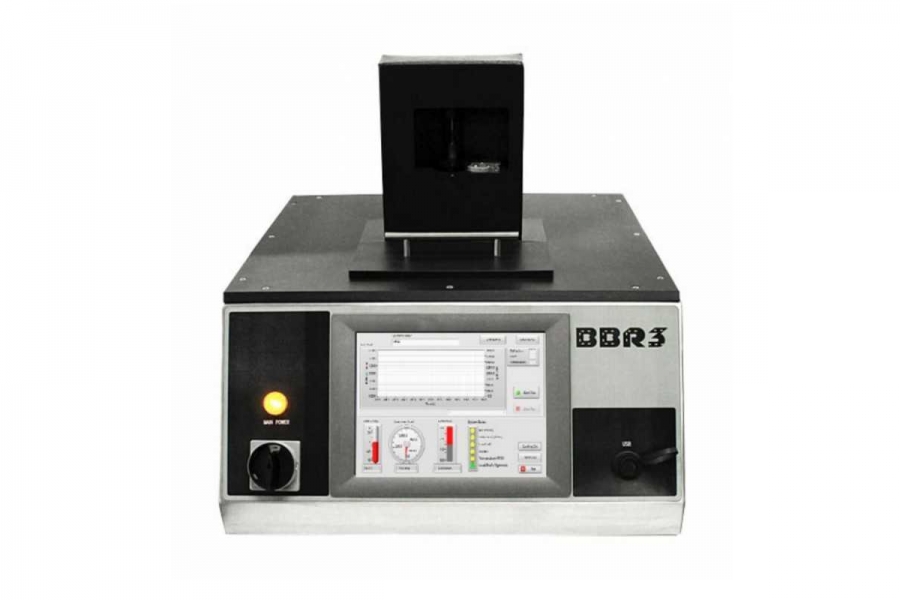
Rheometer BBR3 is designed to determine the stiffness and creep of bitumen at subzero temperatures in accordance with GOST R 58400.8-2019 "Public roads. Materials binding petroleum bitumen. A method for determining the stiffness and creep of bitumen at subzero temperatures using a beam bending rheometer (BBR)".
The essence of the method is to determine the ability of the bitumen binder to resist the load at negative temperatures (stiffness and rate of change of stiffness). A block of bitumen binder (beam), thermostated in a liquid with a low freezing point at a given temperature, is subjected to a vertical load for 240 seconds. During the test, the deviation of the binder bar from the initial position is measured. Based on the data obtained, the stiffness of the binder is calculated. The test makes it possible to assess the resistance of the binder in the coating to cracking at low temperatures.
The rheometer for measuring the bending of the BBR3 beam consists of a device for applying a given vertical load, a displacement sensor, a thermostatic bath, a device for testing for three-point bending, which is removed from the base unit for loading /unloading the sample, an external cooling unit with a temperature controller and a calibration kit, including, among other things, a set of beams with the specified stiffness. The loading shaft lies on a linear pneumatic bearing, which eliminates mechanical friction in the specified node and increases the accuracy of testing.
In 2020, a large-scale upgrade of equipment is taking place in the stationary laboratories of the FAA ROSDORNIA within the framework of the national project "Safe and High-quality Roads". The new equipment will be used in the framework of quality monitoring (audit) for testing road construction materials for compliance with the requirements of existing regulatory and technical documents. We talk about new progressive installations and devices in detail. This week is the turn of installations for testing bitumen binders.
Rheometer BBR3 is designed to determine the stiffness and creep of bitumen at subzero temperatures in accordance with GOST R 58400.8-2019 "Public roads. Materials binding petroleum bitumen. A method for determining the stiffness and creep of bitumen at subzero temperatures using a beam bending rheometer (BBR)".
The essence of the method is to determine the ability of the bitumen binder to resist the load at negative temperatures (stiffness and rate of change of stiffness). A block of bitumen binder (beam), thermostated in a liquid with a low freezing point at a given temperature, is subjected to a vertical load for 240 seconds. During the test, the deviation of the binder bar from the initial position is measured. Based on the data obtained, the stiffness of the binder is calculated. The test makes it possible to assess the resistance of the binder in the coating to cracking at low temperatures.
The rheometer for measuring the bending of the BBR3 beam consists of a device for applying a given vertical load, a displacement sensor, a thermostatic bath, a device for testing for three-point bending, which is removed from the base unit for loading /unloading the sample, an external cooling unit with a temperature controller and a calibration kit, including, among other things, a set of beams with the specified stiffness. The loading shaft lies on a linear pneumatic bearing, which eliminates mechanical friction in the specified node and increases the accuracy of testing.