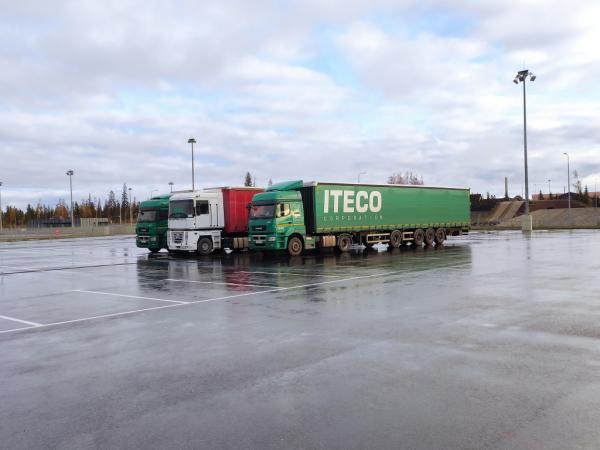
All new cargo vehicles heavier than 3.5 tons will be produced with a built-in weight control system.
The new technology of weight control of freight transport is beginning to be used on Russian roads. Now the mass and axial loads of the truck can be determined using on-board axial load sensors installed directly on the vehicle. Thanks to this, each driver will receive accurate data about the loading of his truck and will be able to transmit this information to the operator's terminal wirelessly. To ensure this task, in the autumn of 2020, specialists of the Russian Road Research Institute (FAA "ROSDORNII") conducted a series of tests of axial load sensors to analyze the possibility of their use for monitoring the weight parameters of vehicles. The tests were carried out for compliance with legal requirements for maximum axial loads and total weight.
Trucks with pneumatic, mechanical and mixed suspension participated in the tests. Measurements they were carried out when vehicles were moving on different types of road surface, on different slopes, with different speeds and degrees of loading. The comparative tests were attended by leading Russian manufacturers of axial load sensors (LLC "WEIGHTS of Systems"; LLC "RD Group"; LLC "New Engineering Technologies"; LLC "GLOBALTECH RUS"), vehicle manufacturers (JSC "Automobile Plant "URAL") and representatives of transport companies (LLC "ITECO RUSSIA"). Satellite monitoring systems "VIALON" and "TRUCK-CONTROL" were used to collect an array of data during the movement of vehicles.

"The new weighing technology is a platform for ensuring the absence of overloading of vehicles and reducing damage caused to highways; assistance to drivers in carrying out loading operations without the use of platform or pad scales; a supporting tool for transport companies when monitoring their own cargo fleet," ROSDORNIA FAA says.
According to experts, before starting serial installation of sensors on cars and trailers, they need to be tested and develop a unified regulation for the use of this equipment, as well as develop a regulatory framework. For this purpose, a series of tests was carried out at the Igor training ground in the Leningrad region. They showed that a new technology using on-board weight control systems can be used to control weight parameters. In particular, the error in the readings of axial load sensors in comparison with certified methods for monitoring the weight of vehicles in a static state does not exceed 5%.

According to the results of the tests, the conditions for the correct functioning of the sensors will be formed depending on the type of road surface, the slope of the surface and the speed range. In addition, proposals are being formed on the frequency of their calibration, certification issues are being considered. In parallel, work is underway on protocols for primary processing, storage and transmission of data.
The requirement to equip cargo vehicles with sensors is planned make it into the technical regulations of the Customs Union (TR CU). This is one of the measures that should contribute to the safety of highways that are destroyed under the influence of heavy trucks. The task is set by the federal project "System-wide measures for the development of the road economy" of the national project "Safe and high-quality highways", which is aimed not only at the construction and renovation of roads, but also at extending their service life.